Type 1 diabetes
Including adult-onset (LADA)
Autoimmune conditionThe immune system destroys the insulin-making cells in the pancreas, so the body can't make enough insulin to control blood sugar.
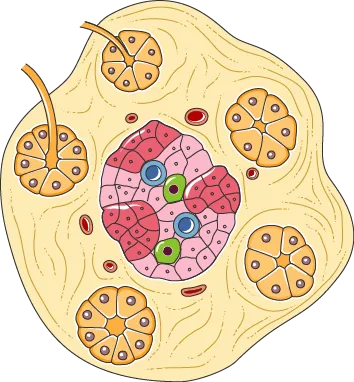
What happens
Antibodies against the pancreas's islet cells can appear years before symptoms. Once most insulin-making cells are lost, blood sugar rises. Type 1 often starts in childhood but can begin at any age. A slower adult-onset form (sometimes called LADA) is often mistaken for type 2 diabetes.
Who gets it
Type 1 diabetes affects women and men about equally. A family history and other autoimmune conditions, such as thyroid disease and celiac disease, raise the risk.
Common signs
- Extreme thirst and frequent urination
- Unexplained weight loss
- Fatigue
- Blurry vision
- Frequent infections
- Nausea, vomiting, or fruity-smelling breath, which can signal an emergency
Labs to ask about
- Blood glucose and A1c
- Islet autoantibodies (GAD65, IA-2, ZnT8, and insulin antibodies)
- C-peptide (shows how much insulin you still make)
- Ketones when blood sugar is high
How it's usually treated
- Insulin by injection or pump
- Continuous glucose monitoring
- Education on food, exercise, and sick days
- Regular screening for thyroid and celiac disease
Supportive steps to discuss with your provider
- Ask about antibody testing if you were diagnosed with type 2 diabetes as a lean adult, or if oral medicines aren't working.
- Consistent sleep, meals, and stress management make blood sugar easier to manage.
- Get screened for thyroid disease and celiac disease periodically.
See a doctor promptly if you have
- Vomiting, abdominal pain, deep fast breathing, or confusion: go to the emergency room
- Blood sugar that stays high, especially with ketones
- Frequent low blood sugar episodes
Related conditions
Hashimoto's thyroiditis
The most common cause of an underactive thyroid in the US. The immune system slowly damages the thyroid, so it makes less hormone over time.
Learn more →Celiac disease
An autoimmune reaction to gluten (in wheat, barley, and rye) that damages the lining of the small intestine and blocks nutrient absorption.
Learn more →Addison's disease
The immune system damages the adrenal glands, so they can't make enough cortisol and aldosterone. It's rare but serious, and different from everyday stress-related fatigue.
Learn more →
Wondering if your symptoms fit a pattern?
Dr. Lesher is a naturopathic doctor who specializes in women's autoimmune and chronic conditions. Since 2020, she has helped more than 900 patients overcome and heal from their conditions.