Conditions across the body
Some conditions are autoimmune, where the immune system mistakes your own tissue for a threat; others are long-term chronic conditions. Tap a body area to see what it does, which conditions can affect it, and the signs worth getting checked.
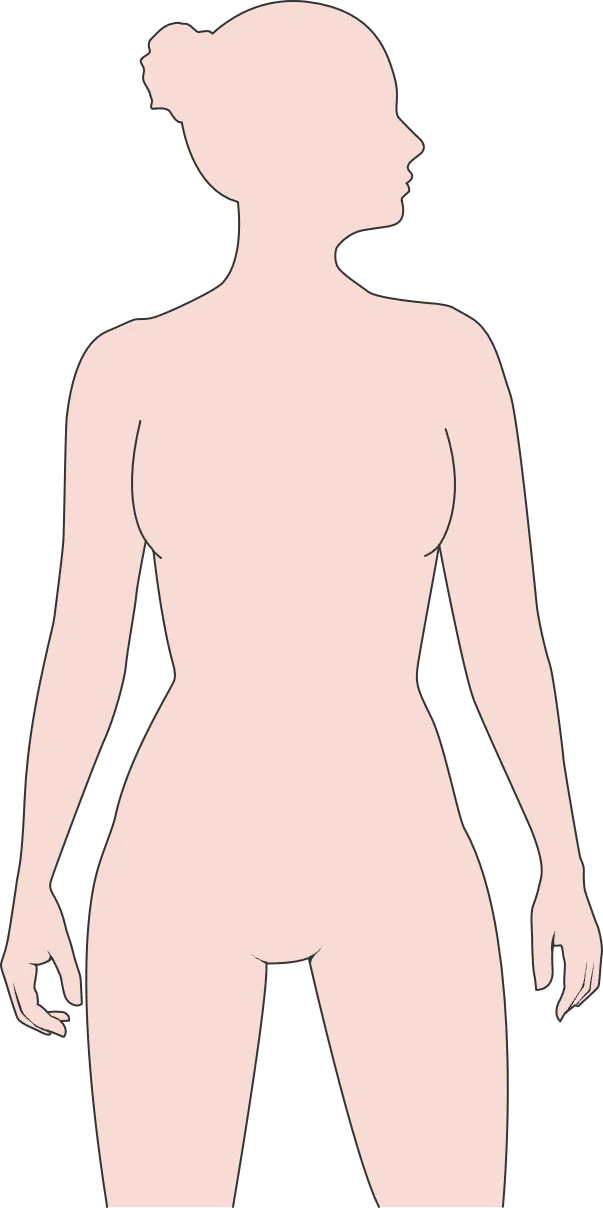
Silhouette: Servier Medical Art, CC BY 4.0, with markers added
Choose an organ
Hover over or tap a number on the body to see what that organ does and which conditions can affect it.
Hair
Hair is often one of the first places to show what's happening inside the body. Changes in shedding or thickness can point to nutrient, thyroid, hormone, or autoimmune causes.
Conditions that can affect it
Explore the hair page →Brain & nerves
Your brain, spinal cord, and nerves carry every signal in your body, from movement and sensation to mood and memory.
Conditions that can affect it
- ADD / ADHD
- Anxiety
- Depression
- Insomnia and sleep disorders
- Migraines and headaches
- Multiple sclerosis
- Chronic infections
- Fatigue and chronic fatigue
- Myasthenia gravis
- Perimenopause and menopause
- Antiphospholipid syndrome
- Period problems
- Pernicious anemia
- Sjögren's disease
- Lupus
Eyes & mouth
Tear and salivary glands keep your eyes and mouth moist and protected. Lasting dryness can be an early clue to an autoimmune condition.
Conditions that can affect it
- Sjögren's disease
- Ankylosing spondylitis
- Graves' disease
- Multiple sclerosis
- Rheumatoid arthritis
- Allergies
- Autoimmune liver disease
- Myasthenia gravis
- Psoriasis & psoriatic arthritis
- Crohn's disease & ulcerative colitis
Thyroid
This butterfly-shaped gland in your neck sets the pace of your metabolism. Autoimmune disease is the most common cause of thyroid problems.
Conditions that can affect it
Explore the thyroid page →Lungs
Your lungs bring oxygen in and carry carbon dioxide out. Several autoimmune conditions can inflame or scar lung tissue, often quietly at first.
Conditions that can affect it
- Asthma
- Allergies
- Insomnia and sleep disorders
- Dermatomyositis & myositis
- Rheumatoid arthritis
- Scleroderma
- Mixed connective tissue disease
- Lupus
Blood & immune system
Blood carries oxygen and nutrients, and white blood cells defend you from infection. In autoimmune disease, that defense system targets your own tissues.
Conditions that can affect it
- Allergies
- Anemia
- Antiphospholipid syndrome
- Chronic infections
- Asthma
- Celiac disease
- Chronic spontaneous urticaria
- Period problems
- Pernicious anemia
- Uterine fibroids
- Fatigue and chronic fatigue
- Polymyalgia rheumatica
- Rheumatologic conditions
- Rheumatoid arthritis
- Lupus
- Mixed connective tissue disease
- Scleroderma
Skin
Your skin is your largest organ and a major immune barrier. Rashes, patches, and color changes are often the first visible signs of an autoimmune condition.
Conditions that can affect it
- Chronic spontaneous urticaria
- Lupus
- Psoriasis & psoriatic arthritis
- Scleroderma
- Skin conditions
- Vitiligo & alopecia areata
- Addison's disease
- Autoimmune liver disease
- Dermatomyositis & myositis
- Mixed connective tissue disease
- Celiac disease
- Crohn's disease & ulcerative colitis
- Polycystic ovary syndrome
- Sjögren's disease
- Allergies
- Perimenopause and menopause
- Rheumatologic conditions
Liver
Your liver filters your blood, processes hormones and medicines, and makes bile to digest fat.
Conditions that can affect it
Explore the liver page →Adrenal glands
These small glands on top of your kidneys make cortisol, aldosterone, and adrenaline, which manage energy, blood pressure, and your stress response.
Conditions that can affect it
Explore the adrenal glands page →Pancreas
Your pancreas makes digestive enzymes and the hormones insulin and glucagon, which keep blood sugar steady.
Conditions that can affect it
Explore the pancreas page →Kidneys
Your kidneys filter waste from your blood, balance fluids and minerals, and help control blood pressure.
Conditions that can affect it
Explore the kidneys page →Digestive tract
Your stomach and intestines absorb nutrients and hold most of your body's immune tissue, which makes the gut a common target in autoimmune disease.
Conditions that can affect it
- Celiac disease
- Crohn's disease & ulcerative colitis
- Digestive issues
- Pernicious anemia
- Endometriosis
- Scleroderma
- Anemia
- Ankylosing spondylitis
- Skin conditions
- Weight management
Reproductive organs
Your ovaries and uterus shape your cycle, fertility, and hormones. Sex hormones also influence the immune system, one reason autoimmune disease is more common in women.
Conditions that can affect it
- Endometriosis
- Fertility challenges
- Perimenopause and menopause
- Period problems
- Polycystic ovary syndrome
- Uterine fibroids
- Anemia
- Antiphospholipid syndrome
- Depression
- Osteoporosis
- Skin conditions
- Blood sugar dysfunction
- Hashimoto's thyroiditis
- Celiac disease
- Lupus
Joints
Joints let your bones move smoothly. Swelling and morning stiffness, rather than ache alone, can point to inflammation.
Conditions that can affect it
- Ankylosing spondylitis
- Mixed connective tissue disease
- Osteoarthritis
- Osteoporosis
- Rheumatoid arthritis
- Rheumatologic conditions
- Crohn's disease & ulcerative colitis
- Polymyalgia rheumatica
- Psoriasis & psoriatic arthritis
- Sjögren's disease
- Chronic infections
- Lupus
- Perimenopause and menopause
Muscles
Your muscles move and steady your body. Autoimmune muscle disease shows up as true weakness, not just soreness.
Conditions that can affect it
- Dermatomyositis & myositis
- Fatigue and chronic fatigue
- Myasthenia gravis
- Polymyalgia rheumatica
- Osteoarthritis
- Rheumatologic conditions
- Mixed connective tissue disease
- Chronic infections
Common chronic conditions affecting women
Autoimmune diseases and other long-term conditions often overlap. Each guide covers early signs, labs to ask about, and when to see a doctor.
ADD / ADHD
ChronicA lifelong difference in how the brain manages attention, focus, and impulses. In women it's often missed or mistaken for anxiety or depression.
Addison's disease
AutoimmuneThe immune system damages the adrenal glands, so they can't make enough cortisol and aldosterone. It's rare but serious, and different from everyday stress-related fatigue.
Allergies
ChronicAn immune overreaction to harmless things in the environment, such as pollen, dust mites, mold, or pet dander.
Anemia
ChronicHaving too few healthy red blood cells, or too little hemoglobin, to carry enough oxygen through the body. Iron deficiency from heavy periods is the most common cause in women.
Ankylosing spondylitis
AutoimmuneAn immune-mediated arthritis that mainly affects the spine and the joints where the spine meets the pelvis, causing back pain and stiffness that improve with movement.
Antiphospholipid syndrome
AutoimmuneAntibodies make the blood more likely to clot, raising the risk of blood clots, strokes, and pregnancy complications.
Anxiety
ChronicWorry, fear, or physical tension that's out of proportion to the situation and gets in the way of daily life. Physical causes such as thyroid or hormone changes can drive or worsen it.
Asthma
ChronicLong-term inflammation of the airways that makes them swell, tighten, and fill with mucus in response to triggers, causing wheezing and shortness of breath.
Autoimmune liver disease
AutoimmuneTwo autoimmune liver diseases that mostly affect women: autoimmune hepatitis attacks liver cells, and primary biliary cholangitis attacks the small bile ducts.
Blood sugar dysfunction
ChronicA spectrum in which the body responds less to insulin, so blood sugar control slowly worsens. It can progress from insulin resistance to prediabetes and type 2 diabetes.
Celiac disease
AutoimmuneAn autoimmune reaction to gluten (in wheat, barley, and rye) that damages the lining of the small intestine and blocks nutrient absorption.
Chronic infections
ChronicOngoing symptoms that follow or are linked to an infection or exposure. Some links are well established, and others are still debated.
Chronic spontaneous urticaria
AutoimmuneHives that appear on their own, without a clear trigger, most days for 6 weeks or longer. In many people, autoantibodies drive the reaction.
Crohn's disease & ulcerative colitis
AutoimmuneImmune-mediated conditions in which the immune system drives chronic inflammation of the digestive tract. They're often grouped with autoimmune diseases.
Depression
ChronicA persistent low mood or loss of interest that lasts at least 2 weeks and affects how you think, feel, and function. It's a medical condition, not a weakness, and it's treatable.
Dermatomyositis & myositis
AutoimmuneAutoimmune conditions in which the immune system inflames the muscles, causing weakness. Dermatomyositis also causes a distinctive rash.
Digestive issues
ChronicOngoing digestive symptoms such as bloating, pain, reflux, or changes in bowel habits. Many are functional, meaning the gut looks normal but doesn't work smoothly.
Endometriosis
ChronicA chronic, estrogen-driven inflammatory condition in which tissue similar to the uterine lining grows outside the uterus, causing pain and sometimes infertility. It isn't classified as autoimmune, but women with endometriosis have higher rates of several autoimmune diseases.
Fatigue and chronic fatigue
ChronicOngoing exhaustion that limits daily life. It can come from a treatable cause, or it can be ME/CFS, a serious illness in which effort makes symptoms worse.
Fertility challenges
ChronicInfertility means not getting pregnant after 12 months of trying, or after 6 months if you're 35 or older. Many causes are treatable, and both partners should be evaluated.
Graves' disease
AutoimmuneThe most common cause of an overactive thyroid. Antibodies switch the thyroid 'on' so it makes too much hormone.
Hashimoto's thyroiditis
AutoimmuneThe most common cause of an underactive thyroid in the US. The immune system slowly damages the thyroid, so it makes less hormone over time.
Insomnia and sleep disorders
ChronicTrouble falling asleep, staying asleep, or waking rested, at least 3 nights a week for 3 months or more. Other sleep disorders, such as sleep apnea, are often missed in women.
Lupus
AutoimmuneA whole-body autoimmune disease that can inflame the skin, joints, kidneys, blood, heart, lungs, and brain.
Migraines and headaches
ChronicMigraine is a common neurological condition that causes repeated attacks of moderate to severe headache, often with nausea and sensitivity to light and sound. Other ongoing headaches, such as tension-type headache, are also common.
Mixed connective tissue disease
AutoimmuneAn overlap condition with features of lupus, scleroderma, and myositis, marked by high levels of an antibody called anti-U1 RNP.
Multiple sclerosis
AutoimmuneThe immune system attacks myelin, the protective coating around nerves in the brain, spinal cord, and optic nerves, disrupting nerve signals.
Myasthenia gravis
AutoimmuneAntibodies block the signal between nerves and muscles, causing weakness that gets worse with use and improves with rest.
Osteoarthritis
ChronicThe most common type of arthritis. The cartilage that cushions the ends of bones breaks down over time, causing pain and stiffness, most often in the knees, hips, hands, and spine.
Osteoporosis
ChronicA condition in which bones become thinner and weaker, so they break more easily. It usually causes no symptoms until a bone breaks.
Perimenopause and menopause
ChronicMenopause is the point 12 months after your last period, when the ovaries have stopped releasing eggs. Perimenopause is the years of shifting hormones before it, when most symptoms begin.
Period problems
ChronicVery painful, heavy, irregular, or missing periods, and severe mood symptoms before a period, are common but not something you have to put up with. They often point to a treatable cause.
Pernicious anemia
AutoimmuneThe immune system attacks cells in the stomach lining that make intrinsic factor, a protein needed to absorb vitamin B12.
Polycystic ovary syndrome
ChronicA common hormone condition that often causes irregular periods, higher androgen (male-type hormone) levels, and insulin resistance. Despite the name, not everyone with PCOS has ovarian cysts.
Polymyalgia rheumatica
AutoimmuneAn immune-mediated inflammatory condition that causes pain and stiffness in the shoulders, neck, and hips, almost always after age 50.
Psoriasis & psoriatic arthritis
AutoimmuneAn immune-mediated condition in which skin cells build up too quickly, forming thick, scaly patches. Up to about 1 in 3 people with psoriasis develop psoriatic arthritis.
Rheumatoid arthritis
AutoimmuneThe immune system attacks the lining of the joints, causing painful swelling that can damage cartilage and bone if untreated.
Rheumatologic conditions
ChronicRheumatology covers conditions of the joints, muscles, bones, and connective tissue, and many of them are autoimmune. This overview explains how inflammatory joint pain differs from mechanical pain, and where to read about specific conditions.
Scleroderma
AutoimmuneThe immune system drives thickening and scarring of the skin, and sometimes internal organs, along with damage to small blood vessels.
Sjögren's disease
AutoimmuneThe immune system targets the glands that make tears and saliva, causing lasting dryness. It can also affect joints, nerves, and other organs.
Skin conditions
ChronicCommon long-term skin conditions that cause breakouts, rashes, redness, or itching. Hormones, immune activity, and the skin barrier all play a role.
Type 1 diabetes
AutoimmuneThe immune system destroys the insulin-making cells in the pancreas, so the body can't make enough insulin to control blood sugar.
Uterine fibroids
ChronicNoncancerous growths of the uterine muscle. Many cause no symptoms, but some cause heavy periods, pelvic pressure, and anemia.
Vitiligo & alopecia areata
AutoimmuneTwo autoimmune conditions of the skin and hair. Vitiligo destroys pigment cells, leaving white patches. Alopecia areata attacks hair follicles, causing patchy hair loss.
Weight management
ChronicBody weight is shaped by genes, hormones, sleep, stress, medicines, and health conditions, not willpower alone. Care here focuses on health and on finding medical causes of weight change, at any body size.
No conditions match. Try another word.

Wondering if your symptoms fit a pattern?
Dr. Lesher is a naturopathic doctor who specializes in women's autoimmune and chronic conditions. Since 2020, she has helped more than 900 patients overcome and heal from their conditions.